Best Website Builder for eCommerce in 2026
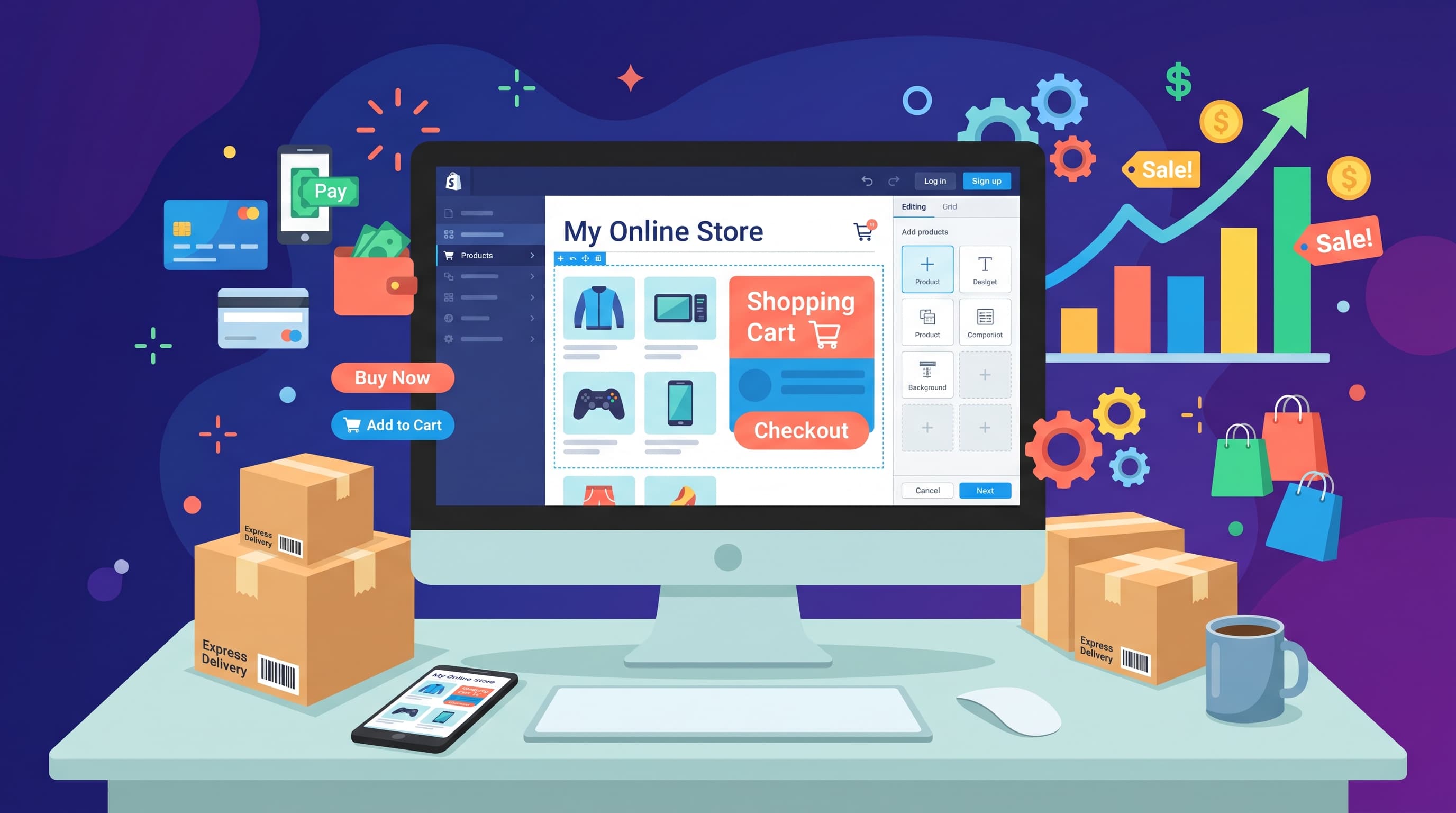
You have products ready and a few customers asking where to buy them, but you are not sure which platform can handle your first sales and your next hundred orders. The best website builder for ecommerce is the one that fits your catalog size and growth plans. Migrating a live store later is painful, so it pays to choose well now.
How Online Store Builders Work
An online store builder combines your website, product catalog, checkout and payments. Ecommerce features cover everything from product variants like size and color to discount codes and order tracking.
Every sale passes through a payment processor that charges a small percentage. Some platforms add their own transaction fees on top, so read the fee page before you compare plan prices.
Comparing the Leading Platforms
Shopify remains the benchmark for dedicated stores. It offers a conversion-focused checkout, multi-location inventory, a built-in POS for in-person sales and thousands of apps. Plans start at $29 per month.
BigCommerce also starts at $29 per month and includes more features in the core plan, such as product filtering and B2B tools. It does not add platform transaction fees, but plans have annual sales thresholds that can push you to a higher tier.
Wix and Squarespace suit brands where the store is part of a wider website. Weebly is a low-cost option that connects neatly with Square for sellers who already use it in person.
Growth Tools and US Sales Tax
Growth features decide how far a platform can take you. Look for abandoned cart emails, product reviews and multichannel selling to social platforms and marketplaces.
US sellers need to collect sales tax in states where they have nexus, meaning a business connection such as sales volume or a warehouse. Shopify, BigCommerce and Wix offer automatic tax calculation, which reduces manual work.
AI tools in 2026 help write product descriptions and suggest marketing copy. They speed up catalog work, but product details still need a human check for accuracy.
Costs and Pitfalls
Apps are the most common hidden cost, especially on Shopify. Reviews, upsells and email marketing apps each add a monthly fee. Review your subscriptions every few months.
Shopify also charges extra fees if you use a third-party payment gateway instead of Shopify Payments. BigCommerce sales thresholds can raise your plan even when you need no new features.
Vendor lock-in applies to every platform. Products and customers can be exported as CSV files, but themes, apps and settings must be rebuilt. Set up redirects from old URLs to protect search rankings if you ever migrate.
Very complex stores with custom pricing logic or deep ERP integrations may need developer work regardless of platform.
Choosing by Catalog Size
A small catalog of a few dozen products runs comfortably on Wix, Squarespace or Weebly. These platforms keep store management simple and cost less each month.
A growing catalog with hundreds of products and several variants needs stronger inventory tools. Shopify and BigCommerce handle bulk editing, stock across locations and detailed product filters much better.
If you sell to other businesses with custom price lists, BigCommerce includes B2B tools in its core plans. On Shopify similar features sit mainly on higher plans.
Final Thoughts
Shopify is the safest long-term choice for serious sellers. BigCommerce suits large catalogs and B2B, while Wix, Squarespace and Weebly work well for smaller stores. See the ranked list on our Best Website Builder for Ecommerce page or compare Shopify vs BigCommerce.
FAQ
Which platform is best for a first online store?
Shopify is the easiest dedicated platform to start with. Wix suits stores with a small catalog.
Do ecommerce builders charge transaction fees?
Payment processors always charge fees. Shopify adds extra fees for outside gateways, while BigCommerce does not.
Can I sell in person too?
Yes. Shopify POS and Weebly with Square both support in-person sales.
How much does an online store cost?
Plans start around $16 to $29 per month, plus payment fees and any paid apps.
Can I move my store later?
Yes, but expect to rebuild the design and reconnect apps.
